Quick answer
Bark training usually stalls for practical reasons, not because the dog cannot learn: the family responds in different ways, people quit during the first week when barking briefly gets worse, the routine falls apart on busy days, or the training tool is not used every time. The fix is to make the same response happen every time with as little effort as possible: one family plan, a fixed daily slot, a reminder to charge the collar, and a tool such as the NooBark smart collar that gives the same cue even when you are busy.
Why consistency matters so much to a dog
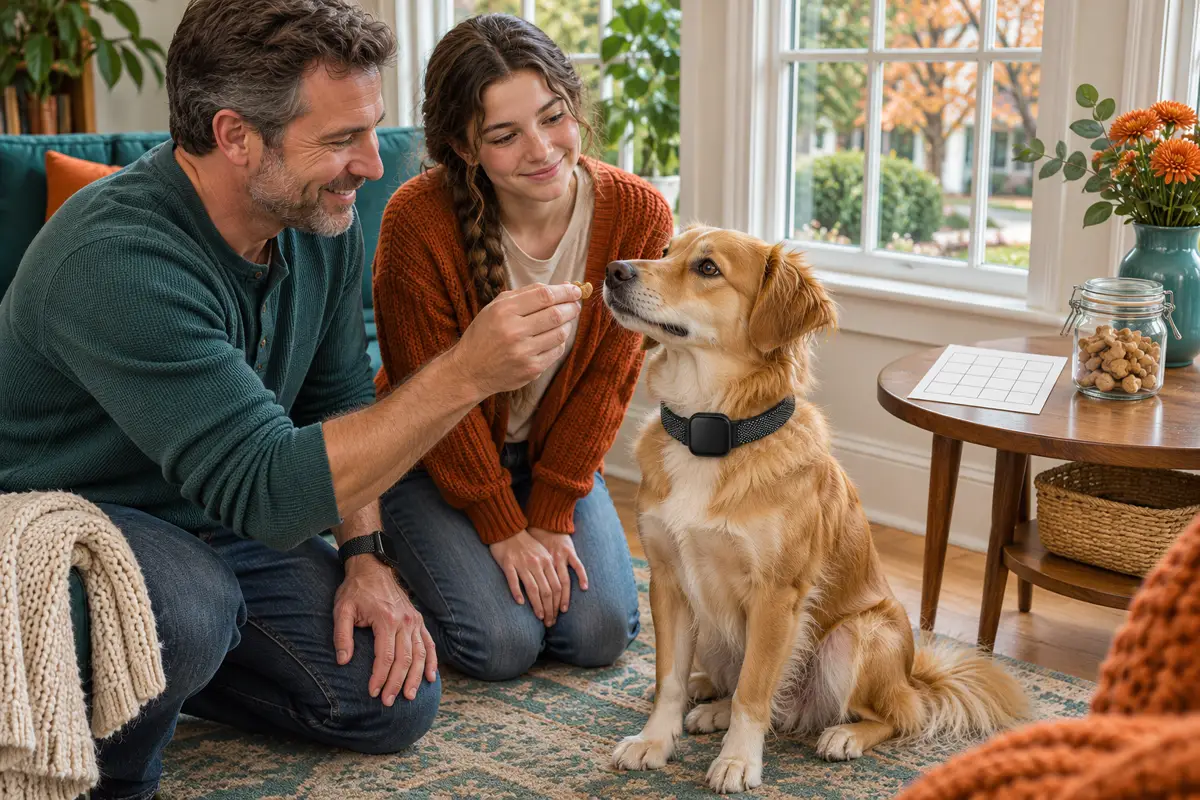
Dogs learn from what happens right after they do something. If barking at the window is ignored on Monday, gets a “hey, quiet!” on Tuesday and earns a treat to stop on Wednesday, your dog learns one thing: barking sometimes works, so keep trying. That on-and-off pattern can make a habit stronger, not weaker. That is why the Humane Society of the United States puts it plainly in its barking advice: stay consistent so you do not confuse your dog, and everyone in the family should apply the same training every time the dog barks inappropriately.
The other half of consistency is you. Your new routine is a habit too. A 2009 study from University College London (Lally and colleagues) followed people building a new daily habit and found it took a median of about 66 days for the behavior to feel automatic, with wide variation from person to person. In other words: expect the first weeks to take effort, and set things up so the routine survives a bad day.
The 8 obstacles that make people give up
| Obstacle | Why it happens | One-step fix |
|---|---|---|
| 1. Everyone at home does something different | No shared plan; one person ignores, another yells, a third gives treats | Write one cue, one reward and one response on a fridge note |
| 2. Barking gets worse in week one | When an old payoff stops, many dogs try harder for a while | Expect it, log it, and keep going for two more weeks |
| 3. No time on busy days | Training is treated as an extra task instead of part of the day | Tie a 5-minute session to something you already do, like the morning coffee |
| 4. The collar is on some days, off others | It is put on only after the barking starts | Put it on at the same times daily, before the usual barking hours |
| 5. Forgetting to charge | A long battery makes it easy to forget | Set a phone reminder every second Sunday |
| 6. Quiet goes unnoticed | People react to barking but ignore calm moments | Keep a treat pouch by the window and reward the first quiet seconds |
| 7. Holidays, visitors and travel | The routine breaks exactly when triggers multiply | Plan a “visitor routine” in advance: mat, chew, collar on |
| 8. Expecting perfection | One bad evening feels like total failure | Track weekly totals, not single days, in a simple log |
1. Everyone at home does something different
This is the most common reason bark training stalls in families. Sit down for five minutes and agree on three things: the cue (for example “quiet”), the reward for silence (a small treat or calm praise) and the response to barking (no yelling, no opening the door, no attention until quiet). Write them on a note on the fridge. Give each person one job, such as one person on morning walks and another on the evening “go to your spot” practice. Our one-page barking cheat sheet is made for exactly this.
2. Barking gets worse before it gets better
If barking has been earning attention for months, your dog will often push harder when that attention stops. Trainers call this an extinction burst, and it is the point where most people decide “it is not working” and go back to old habits, which teaches the dog that louder barking wins. Knowing it is coming is half the battle. Keep the response the same and it usually fades. If you want a realistic timeline, see how long a bark collar takes to work, week by week.
3. No time on busy days
A training plan that needs 30 free minutes will not survive a Tuesday. Shrink it and attach it to something you already do: a 5-minute “find it” game while the coffee brews, a sniff walk before you leave for work, a mat-stay practice during the TV ad break. Habit research consistently points to cues like these, tied to a fixed moment, as what makes new routines stick.
4 and 5. The tool is not there every time
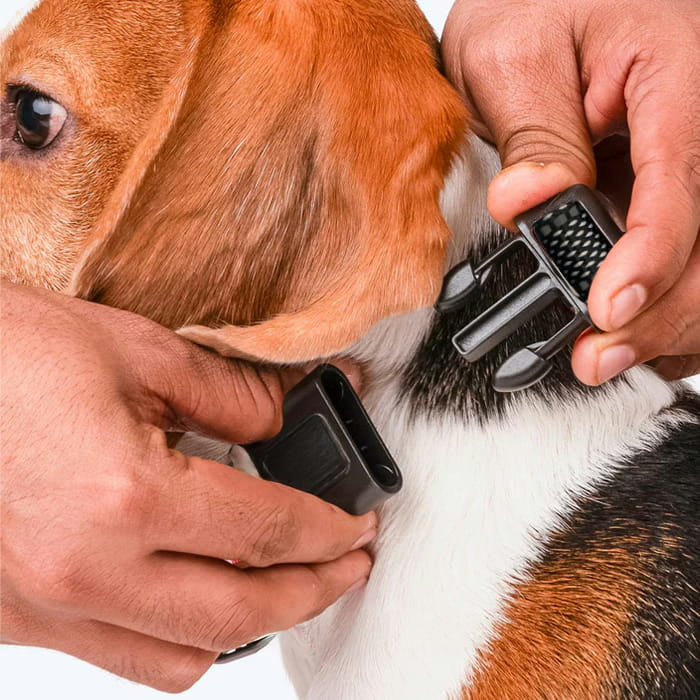
A bark collar teaches through consistency: the same cue, at the same instant, every time your dog barks. If it goes on only after the barking has started, or sits in a drawer with a flat battery, the dog gets the same mixed signal as with inconsistent people. Put it on at fixed times, before the hours your dog usually barks most, and take it off for the night or rest periods as the maker advises (we cover timing in should a dog wear a bark collar all day?). Check the fit too: a collar that is too loose cannot detect barking reliably, as we explain in how tight a bark collar should be. And set a recurring phone reminder to charge it.
6. Quiet goes unnoticed
We react to noise and ignore silence, so dogs get far more feedback for barking than for being calm. Flip it: keep a small pouch of treats near the window or front door and reward the first few seconds of quiet after a trigger, such as a passing dog. Over time, quiet becomes the behavior that pays.
7. Holidays, visitors and travel
The end of the year brings doorbells, deliveries, guests and late nights, exactly the triggers that make barking spike, and exactly when routines collapse. Plan a short visitor routine in advance: collar on before guests arrive, a long-lasting chew on the dog’s mat, one person in charge of the dog for the first ten minutes. Our guide to barking at the door walks through the doorbell part step by step.
8. Expecting perfection
Progress is rarely a straight line. One noisy evening after three quiet days is normal. Track weekly totals instead of single days: a simple tally of barking episodes per day, written on the fridge note or in a notebook, shows the trend that one bad day hides. If you like numbers, our dog barking diary has a ready-made template.
A simple family plan for the next month
- Day 1: agree on cue, reward and response; put the note on the fridge.
- Every day: collar on at the same times; one sniff walk and one 5-minute training game.
- Every evening: write down the number of barking episodes.
- Every second Sunday: charge the collar and look at the weekly totals together.
- After four weeks: keep the routine going; habits on both sides need time to settle.
If barking comes with fear, aggression, signs of pain or starts suddenly in an older dog, talk to your veterinarian before anything else.
Our recommendation: the NooBark smart collar
The hardest part of bark training is not knowing what to do; it is doing it the same way every single time. That is exactly why we recommend the NooBark smart anti-bark collar. It gives your dog the same gentle cue the instant it barks, whether you are home, cooking, on a work call or asleep, and it does not depend on which family member happens to be around. Paired with the simple plan above, it is the most practical way we know to keep training consistent long enough for the quiet to stick.
- The same response every time. No mixed signals, no off days, no “who was supposed to handle it?”
- Reacts only to your dog. Waveform detection recognizes your dog’s own bark and ignores the TV, other dogs and household noise.
- Gentle-first modes. Sound, vibration, an optional adjustable static mode and a combination mode, so you choose how mild to go.
- 8 sensitivity levels. Tune it to your dog’s size and your home.
- Long battery. Around 15 days per 2-hour charge, according to the maker, so one reminder every two weeks is enough.
Owners rate it 4.8/5 across more than 1,900 reviews, and in our own testing it earned a 4.6/5. Start on sound or vibration and pair it with the family plan above. It is up to 75% off on the official store, with a 30-day money-back guarantee. Read our full NooBark review for the details.
Dog training consistency: FAQ
Why is consistency so important in dog training?
Dogs learn from what happens right after a behavior. If barking is sometimes ignored, sometimes yelled at and sometimes rewarded with attention, the dog keeps trying because barking still works some of the time. The Humane Society of the United States advises that everyone in the family apply the same training methods every time the dog barks inappropriately.
Why does my dog bark more when I start training?
If barking used to earn attention, a treat or an open door, a dog often tries harder for a while when that payoff stops. Trainers call it an extinction burst. It is a sign the old pattern is being tested, not that training failed, so stay consistent for another week or two.
How long does it take to stop a dog barking?
Many dogs show a change within days to a few weeks of consistent training, but lasting change takes longer. Research on how people form new habits, such as the 2009 University College London study by Lally and colleagues, found a median of about 66 days for a daily behavior to become automatic, so plan for a couple of months of steady routine on your side.
What if family members are not consistent?
Agree on one cue, one quiet reward and one response to barking, write them on a note on the fridge and give each person one job. A bark collar that responds the same way every time also helps, because it does not depend on who is home.
Can a bark collar help with consistency?
Yes, that is one of its main benefits. A smart collar like NooBark gives the same gentle cue the moment your dog barks, every time, even when you are busy, asleep or out. It works best as part of a routine that also includes exercise and rewards for quiet.
When should I get help with barking?
If barking comes with fear, aggression, signs of pain or starts suddenly in an older dog, talk to your veterinarian first, and ask about a qualified trainer or veterinary behaviorist.
Want more? Read how much exercise a dog needs to bark less, head back to the NooBark overview or read our NooBark review.