Quick answer
A bark collar should be snug, not tight: the unit stays against the throat without sliding or spinning, and you can still slip your fingers under the strap. Fit it high on the neck, just below the jaw, and follow your model’s own check (the NooBark setup calls for room for two fingers under the strap). Use it for the hours barking is a problem rather than all day and night, and check the skin daily. A light collar with an adjustable strap, like the NooBark, makes a good fit easy for small to large dogs.
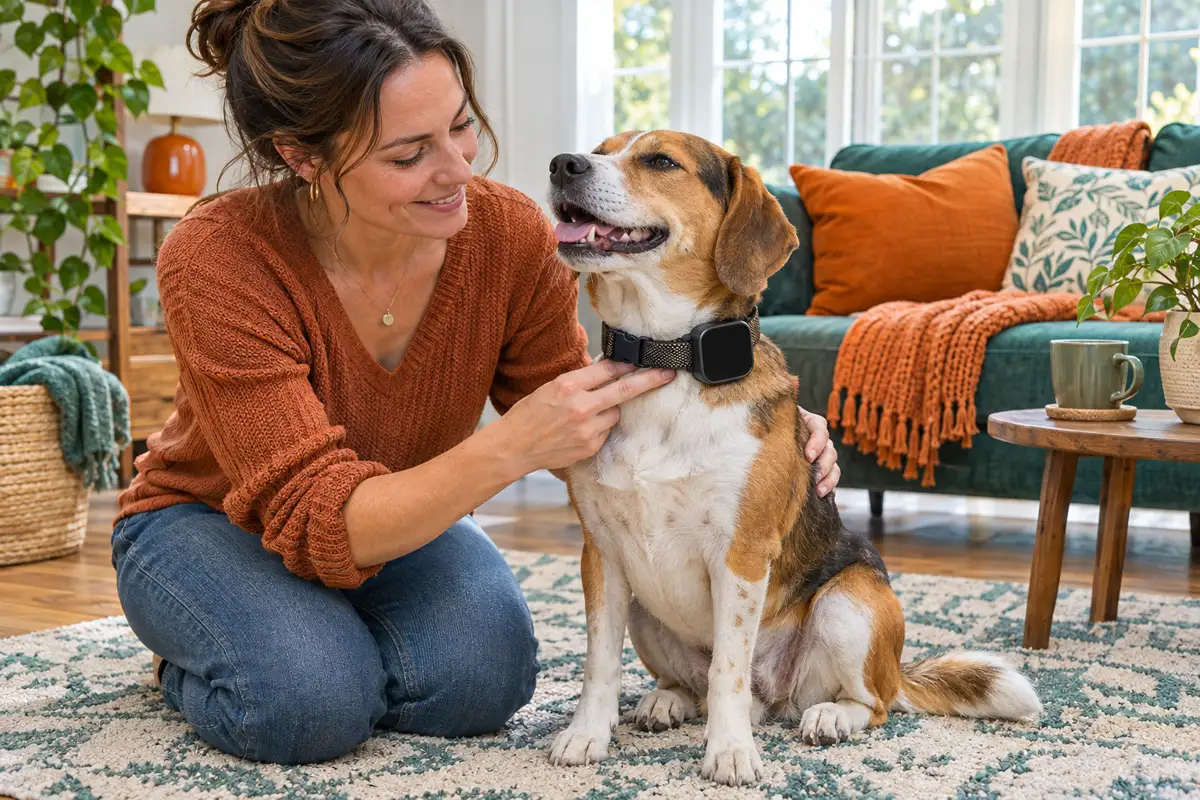
Most problems people blame on a bark collar are really fit problems. The collar “doesn’t react” because the unit has slid to the side of the neck. It “goes off randomly” because it is bouncing against the chest. Or the dog is uncomfortable because the strap was pulled one notch too far. Manufacturers’ fitting guides all aim for the same thing: snug but not constricting. This guide turns that into simple steps you can do at home.
Why the fit matters so much
- Detection: a smart collar senses your dog’s bark from the throat. If the unit drifts away from the neck, it can miss barks.
- Consistency: a collar that responds the same way every time is what helps a dog connect barking with the cue. Inconsistent responses confuse the lesson.
- Comfort and skin health: a collar that is too tight, or worn too many hours, can rub and irritate the skin. One that is too loose can rub as it moves.
Step 1: put it in the right place
Fit the collar high on the neck, just below the jaw and behind the ears, with the unit sitting under the chin against the throat. That is where it can feel the bark most clearly. A bark collar should not sit low at the base of the neck like a regular walking collar, where it slides and loses contact.
Step 2: the finger check
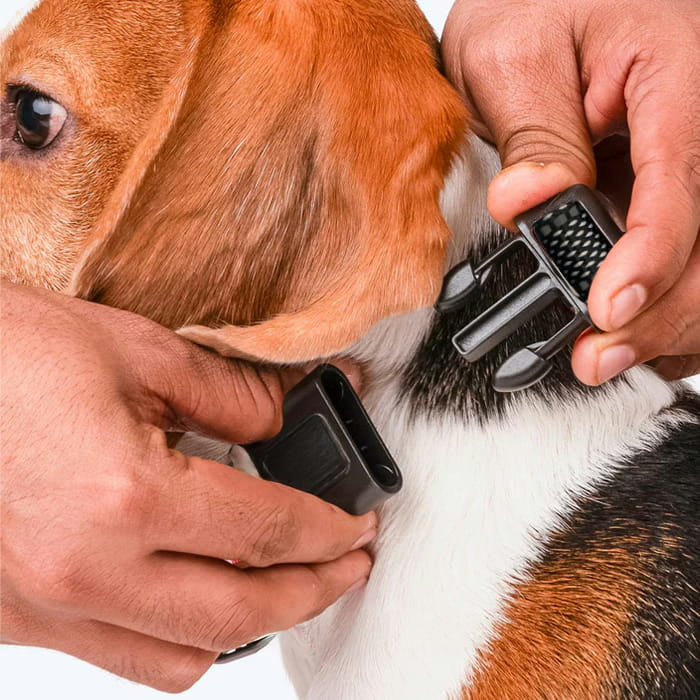
- Buckle and tightenClose the buckle and adjust the strap so the unit rests against the throat.
- Slide your fingers underYour fingers should slip under the strap with gentle resistance. Manufacturers describe the exact check for their model: some ask for one finger behind the contact points, and the NooBark setup calls for room for two fingers under the strap.
- Try to rotate itGently turn the collar. If the unit spins easily to the side, tighten it one notch.
- Watch your dogYour dog should breathe, swallow, eat and drink normally. Any coughing or gagging means it is too tight.
- The shake testLet your dog shake. The unit should stay under the chin, not flip around.
Too loose vs. too tight: quick checklist
| Sign | What it means | Fix |
|---|---|---|
| Unit spins to the side or slides down | Too loose | Tighten one notch, refit higher on the neck |
| Collar reacts inconsistently | Unit losing contact | Check position and tighten slightly |
| You cannot get your fingers under | Too tight | Loosen one notch |
| Coughing, gagging, trouble swallowing | Too tight | Loosen right away |
| Red marks or hair loss under the unit | Too tight or worn too long | Take it off, rest the skin, see your vet if it persists |
Step 3: wear time and skin checks
Fit is only half of comfort; the other half is how long the collar stays on. Follow the daily wear limit in your collar’s manual (several manufacturers set limits in the range of 8 to 12 hours a day) and use it during the times barking is actually a problem: when visitors arrive, while you are out, in the yard. Take it off for sleep and long rest periods.
- Check the skin daily under the unit for redness or rubbing.
- Keep the neck and the unit clean and dry, especially after rain or a bath.
- Re-check the fit weekly for puppies and growing dogs, and after a haircut or grooming, when the coat is thinner.
- Long or thick coats: part the fur under the unit so it rests close to the skin instead of on top of the coat.
Your first-day setup, step by step
- Charge it fullyStart the first day with a full battery so the collar behaves the same all day.
- Choose the gentlest modeBegin with sound or vibration and a moderate sensitivity. You can adjust later.
- Let your dog wear it switched off firstA few minutes of treats and play while wearing it helps your dog feel relaxed about the collar.
- Fit it and do the finger checkHigh on the neck, unit under the chin, snug but not tight.
- Supervise the first sessionsStay nearby the first few times it responds, and reward calm, quiet moments.
- Take notesA simple barking diary shows when barking happens and whether the settings need adjusting.
Wondering what happens next? Our guide on how long a bark collar takes to work sets out what to expect week by week, and how anti-bark collars work explains the detection and modes.
Common fitting mistakes
- Fitting it like a walking collar, low on the neck. It needs to sit high, under the jaw.
- Over-tightening to “make it work”. If detection is unreliable, check position and settings before pulling the strap tighter.
- Leaving it on 24/7. Skin needs rest; use it for the problem hours.
- Attaching a leash to it. Use a separate collar or harness for walks.
- Never re-checking. Dogs grow, coats change and straps loosen; check the fit regularly.
Why the right collar makes a good fit easy
A heavy, bulky collar is harder to fit well, especially on small dogs. The NooBark is light, has an adjustable strap for small, medium and large dogs, and detects your own dog’s bark from the waveform, so once it sits correctly it responds reliably without needing to be over-tightened.
Our recommendation: the NooBark smart collar
If you want a bark collar that is simple to fit correctly and comfortable to wear, the NooBark smart anti-bark collar is the one we recommend. It is designed around the gentlest correction that works, and its fit and setup are straightforward for first-time owners.
- Adjustable strap for all sizes. From small breeds to large dogs, with a light body that sits comfortably under the chin.
- Gentle-first modes. Sound, vibration, an optional adjustable static mode and a combination mode.
- 8 sensitivity levels. Fine-tune it instead of over-tightening the strap.
- Reacts only to your dog. Waveform detection recognizes your dog’s own bark and filters out other dogs, the TV and street noise.
- Easy to live with. IP67 waterproof, around 15 days of battery per 2-hour charge and a simple LED touch display.
Owners rate it 4.8/5 across more than 1,900 reviews, and in our own testing it earned a 4.6/5. Follow the maker’s guidance on age, size, fit and daily wear, and check with your vet if your dog has any health concerns. It is up to 75% off on the official store, with a 30-day money-back guarantee.
Bark collar fit: FAQ
How tight should a bark collar be?
Snug enough that the unit stays in contact with the neck and does not slide or spin around, but loose enough that you can slip your fingers under the strap and your dog can breathe, swallow, eat and drink normally. Manufacturers describe the exact check for their model; the NooBark setup calls for room for two fingers under the strap.
Where should a bark collar sit on the neck?
High on the neck, just below the jaw and behind the ears, with the unit under the chin against the throat, where it can sense your dog's bark. A collar that slides down to the base of the neck often misses barks and moves around.
How do I know if a bark collar is too loose?
If the unit spins to the side of the neck, slides down toward the shoulders or the collar moves freely over the fur when your dog shakes, it is too loose. A loose collar may not detect barks reliably and can rub as it moves.
How long can a dog wear a bark collar each day?
Follow the daily wear limit in your collar's manual. Several manufacturers set limits in the range of 8 to 12 hours a day. In general, use it during the times barking is a problem rather than around the clock, take it off for sleep, and check the skin under it every day.
Can I leave a bark collar on overnight?
Most guidance says no: take it off for long rest periods so the skin can breathe, then put it back on for the times barking is a problem. If night barking is the main issue, follow your collar's manual and check the skin every morning.
What if the collar leaves red marks on my dog's neck?
Take it off, let the skin rest and check the fit, the wear time and that the area under the unit is clean and dry. If redness, sores or hair loss do not clear quickly, see your veterinarian before using the collar again.
Want to keep reading? See is a bark collar right for your dog?, read are bark collars cruel? myths vs. facts, visit the NooBark overview or read our complete NooBark review.