Quick answer
Many dogs pause or bark less within the first few days, and most owners see a clear difference within one to two weeks. Habit barkers and very territorial dogs can take three to four weeks of consistent use before the quiet behavior is reliable, and a short "testing" phase in week two is normal. Consistency is what speeds it up: the same gentle cue on every first bark, a reward for quiet, and enough exercise. A collar that reacts only to your own dog's bark, like the NooBark smart collar, keeps that cue consistent even when you're not watching.
Bark collars are often sold as an instant fix, and that sets owners up for disappointment. A good collar does something very simple: it interrupts the bark at the exact moment it starts, every time. Learning happens in the moments after that interruption, and learning takes repetition. The good news is that for everyday alarm, territorial and habit barking, the timeline is usually short, as long as you know what to expect and don't change the plan halfway through.
What decides how fast it works
- Why your dog barks. Alarm barking at the doorbell often improves fastest. Long-running habit barking at the fence or window takes longer. Barking from fear or separation anxiety is a different problem altogether (more on that below).
- How long the habit has existed. A dog that has barked at the mail carrier every day for three years has had a lot of practice.
- Consistency. A cue that arrives on every first bark teaches far faster than one that only works when the collar happens to be on or catches the bark.
- Fit and detection. A loose strap, a collar sitting too low or one that misses barks makes the cue inconsistent, which slows everything down.
- What else changes. Exercise, enrichment and fewer triggers make the collar's job much easier.
The week-by-week timeline
| When | What you'll typically see | Your job |
|---|---|---|
| Days 1–2 (collar off) | Nothing changes; your dog gets used to wearing it | Let it wear the collar with no modes active |
| Days 3–7 | Surprised pauses mid-bark; shorter barking bouts | Gentlest setting; reward every pause |
| Week 2 | Clear drop in barking, sometimes followed by a few days of "testing" | Stay consistent; don't change settings in frustration |
| Weeks 3–4 | Quiet becomes the default in most trigger situations | Keep rewarding; work on the hardest trigger |
| After week 4 | Reliable calm; collar needed less often | Fade the collar gradually; keep the routine |
These are typical patterns, not guarantees. Every dog is different, and some get there faster while some need more time.
Days 1–2: introduce it switched off
Put the collar on with all modes off and let your dog wear it during normal life: walks, play, meals. The goal is for the collar to become just another collar, so your dog doesn't link it to anything good or bad. Check the fit: snug enough that the unit sits in contact, loose enough to slip two fingers under the strap (our guide on how tight a bark collar should be shows the full check).
Days 3–7: the first pauses
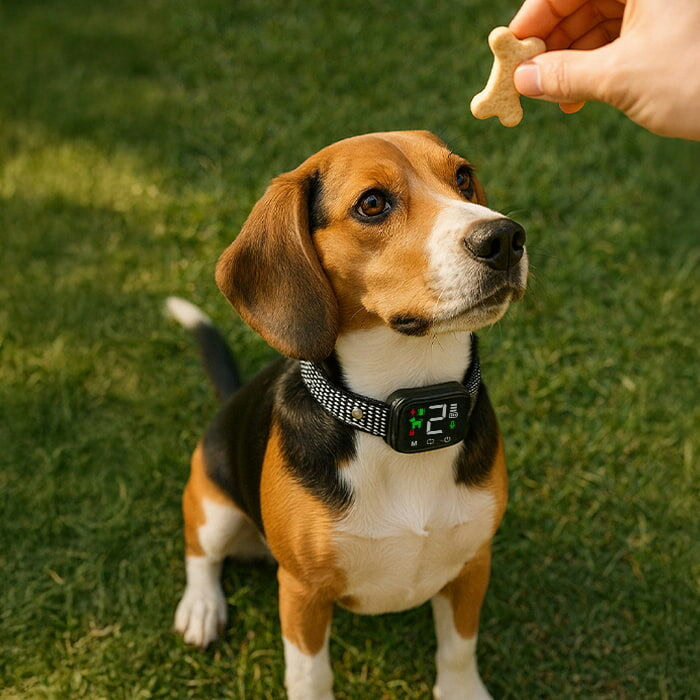
Switch on the gentlest mode, a beep or a vibration, at the lowest sensitivity that still catches the bark. Most dogs react to the first few cues with a surprised pause: they stop, look around, maybe tilt their head. That pause is the moment that matters. Calmly praise it or toss a treat. By the end of the first week, many owners notice the barking bouts getting shorter, even if the first bark still happens.
Week 2: the drop, and the "test"
This is where most owners see the clearest change: fewer barks, quicker recovery, a dog that glances at you after the first bark instead of launching into a full session. It's also when something confusing can happen. Collar makers and trainers often describe a testing phase, when some dogs bark more for a few days, as if checking whether the new rule still applies.
The worst thing you can do here is change the plan: turn the collar off, jump to a much firmer setting, or start yelling again. Keep the same gentle cue, keep rewarding quiet and keep the routine. When the answer stays the same every time, the testing usually fades. (These are the classic training mistakes that make barking worse.)
Weeks 3–4: quiet becomes the habit
By now quiet is starting to be the default. Pick the trigger that's still hardest, usually the doorbell, the fence line or the window, and work on it specifically. Our guides on barking at the door and barking in the backyard have targeted routines for each.
After a month: fade the collar
Once the calm has held for a couple of weeks, start using the collar only in the trickiest situations, then for shorter sessions. Keep the rewards and the exercise in place, since they're what hold the habit. If barking creeps back after a change (a move, a new neighbor's dog, a new baby), a short refresher with the collar usually resets things quickly.
Mistakes that slow progress
- Turning it up too fast. Jumping to a firmer mode on day two doesn't speed things up; it just adds stress. Give the gentle setting a fair trial.
- A loose or low-sitting collar. If the collar misses barks, the cue is inconsistent and learning slows down. Re-check the fit first when progress stalls.
- Collar on, routine off. The collar interrupts; the reward for quiet teaches. Skipping the reward makes progress slower.
- Wearing it all day and night. Use it for training sessions, take it off at night and during rest, and check the skin under the strap regularly.
- Ignoring the cause. A bored, under-exercised dog will keep finding reasons to bark. A longer walk and a food puzzle make every other step easier. If you're not sure why your dog barks, start with why dogs bark so much.
When a collar is not the answer
If your dog barks while pacing, drooling, scratching at the door or destroying things when left alone, that's distress, not a habit, and no collar should be used on it. The same goes for dogs that bark out of fear. Talk to your veterinarian or a qualified trainer first; our guide on barking when home alone explains the difference.
Our recommendation: the NooBark smart collar
The single biggest factor in how fast a bark collar works is consistency: the same gentle cue, on the right bark, every time. That's exactly what the NooBark smart anti-bark collar was designed to deliver, and it's why it's the collar we recommend for owners who want results in weeks, done kindly. Once the quiet has held for a few weeks, follow our step-down plan to wean your dog off the collar.
- It fires only on your dog. NooBark's waveform detection recognizes your own dog's bark and filters out other dogs, traffic and household noise, so every cue is connected to what your dog actually did, which is what makes learning fast.
- Gentle-first modes. Sound, vibration, an optional adjustable static mode and a combination mode. Start with sound or vibration and you may never need anything else.
- 8 sensitivity levels. Dial in the lowest setting that reliably catches the bark, so it doesn't miss and doesn't overreact.
- Built for the long run. Light, adjustable strap for all dog sizes, IP67 waterproof, around 15 days of battery per 2-hour charge and a simple LED touch display.
- Time to see the change. The official store offers up to 75% off and a 30-day money-back guarantee, which comfortably covers the whole week-by-week timeline above.

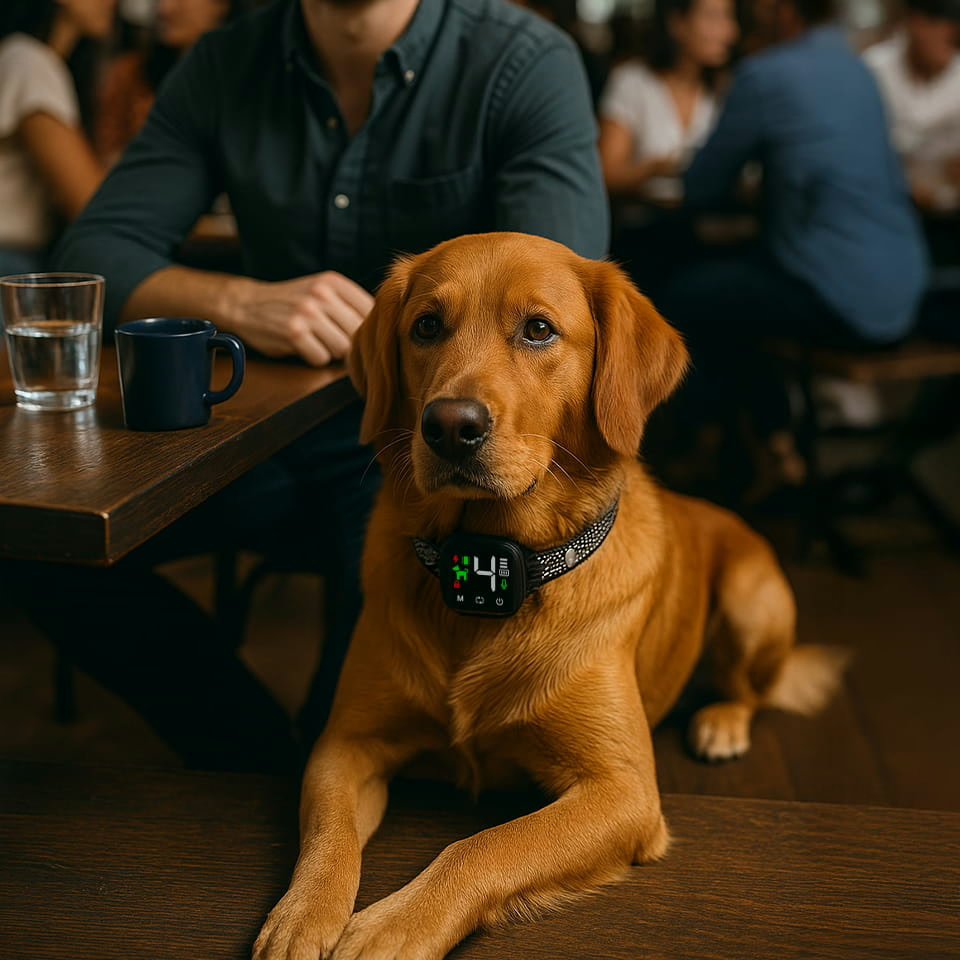
Owners rate it 4.8/5 across more than 1,900 reviews, and in our own testing it earned a 4.6/5. It won't replace a trainer for a fearful dog, and nothing should. But for everyday alarm, territorial and habit barking, it's the consistent, gentle tool we'd choose to get a quieter home in weeks, not months.
Bark collar timeline FAQ
How long does it take for a bark collar to work?
Many dogs pause or bark less within the first few days, and most owners see a clear difference in the first week or two. Habit barkers and very territorial dogs can take three to four weeks of consistent use before the quieter behavior is reliable. The exact time depends on why your dog barks and how consistent the routine is.
Why is my dog barking more in the second week with the collar?
Collar makers and trainers often describe a "testing" phase: after an early drop, some dogs bark more for a few days to check whether the rule still applies. Stay consistent, keep the same gentle setting and keep rewarding quiet. If the cue stays the same every time, this phase usually passes.
Should I increase the setting if the collar isn't working?
Check fit and detection first: a loose strap or a collar sitting too low often misses barks, which looks like "not working". Then make sure your routine includes exercise and rewards for quiet. Only move up a level after a fair trial on the gentlest setting, and never go to a firmer mode with a fearful or anxious dog.
Can I stop using the bark collar once my dog is quiet?
Yes, gradually. Once the quiet behavior has held for a couple of weeks, use the collar only in the trickiest situations, then for shorter sessions, while keeping the rewards and routine in place. Many dogs keep the habit; if barking creeps back, a short refresher usually resets it.
How many hours a day should my dog wear the collar during training?
Only during the situations you're working on, typically a few hours a day, and never 24/7. Take it off at night and during rest, and check the skin under the strap regularly.
What if my dog barks from anxiety?
Then a collar is not the right first step. Barking with pacing, drooling, destruction or panic when left alone points to separation distress or fear. Talk to your veterinarian or a qualified trainer and work on the cause before using any collar.
Still deciding whether a collar is right for your dog? Read are bark collars cruel? 7 myths vs. the facts, see how anti-bark collars work, visit the NooBark overview or read our complete NooBark review.