Quick answer
Dogs bark at the door because the bell or knock reliably predicts a stranger or exciting visitor. To stop it, take the surprise out of the sound (practice the doorbell at low intensity and reward calm), teach a "go to your mat" routine for when someone arrives, stop rewarding the frenzy, and add a consistent, gentle cue the instant the barking starts, such as a smart collar that reacts only to your dog's own bark.
Here's the thing about the front door: to your dog, it's the most exciting place in the house. Everything interesting comes through it. Visitors who give belly rubs, strangers who smell new, packages, sometimes even food. So when the bell rings, your dog isn't being "bad." They're reacting to a sound that has predicted something big hundreds of times. The fix is changing what that sound means.
Why dogs bark at the door
Door barking usually falls into one of three types, and knowing yours helps you pick the right approach:
- Alert or territorial barking. Your dog is announcing "someone is here!" and guarding the home. Often deep, steady barking, sometimes with stiff posture at the door or window.
- Excitement barking. High-pitched barking, spinning, jumping and a wagging tail. This dog loves visitors and simply can't contain it.
- Nervous barking. Barking from a distance, backing away, tucked tail or hiding afterward. This dog is unsure about strangers and needs a gentler, slower plan.
Most dogs are a mix. If you'd like a deeper look at how to read different barks, our guide on why dogs bark so much breaks down every main type.
6 steps to stop door barking
- Take the surprise out of the doorbellRecord your doorbell or a knock on your phone and play it quietly while your dog is relaxed. Reward calm with a treat. Over several short sessions, slowly increase the volume. You're teaching your dog that the sound means "a treat is coming," not "intruder!"
- Teach a "go to your mat" routinePick a mat or bed a few steps from the door. Reward your dog for going there and staying. Once it's solid, use the doorbell sound as the cue to go to the mat. It's much easier for a dog to do something than to simply stop doing something.
- Practice with a helperAsk a friend or family member to ring the bell, wait and leave, again and again. Open the door only when your dog is quiet on the mat. Short, repeated "fake visits" build the habit far faster than waiting for real guests.
- Stop rewarding the frenzyIf the door opens while your dog is barking and jumping, the visitor's attention becomes the prize. Keep greetings calm, ask guests to ignore your dog until they settle, and reward the quiet moment.
- Add a consistent, gentle cueTiming is everything, and in the rush to answer the door you rarely manage it. A smart collar that responds instantly to your dog's own bark with a beep or vibration delivers the same calm signal on bark number one, every time.
- Manage the triggers in betweenWhile you train, reduce practice of the old habit: frost or cover low windows by the door, use a "no doorbell, please knock" note for deliveries, or keep your dog in another room for big gatherings.
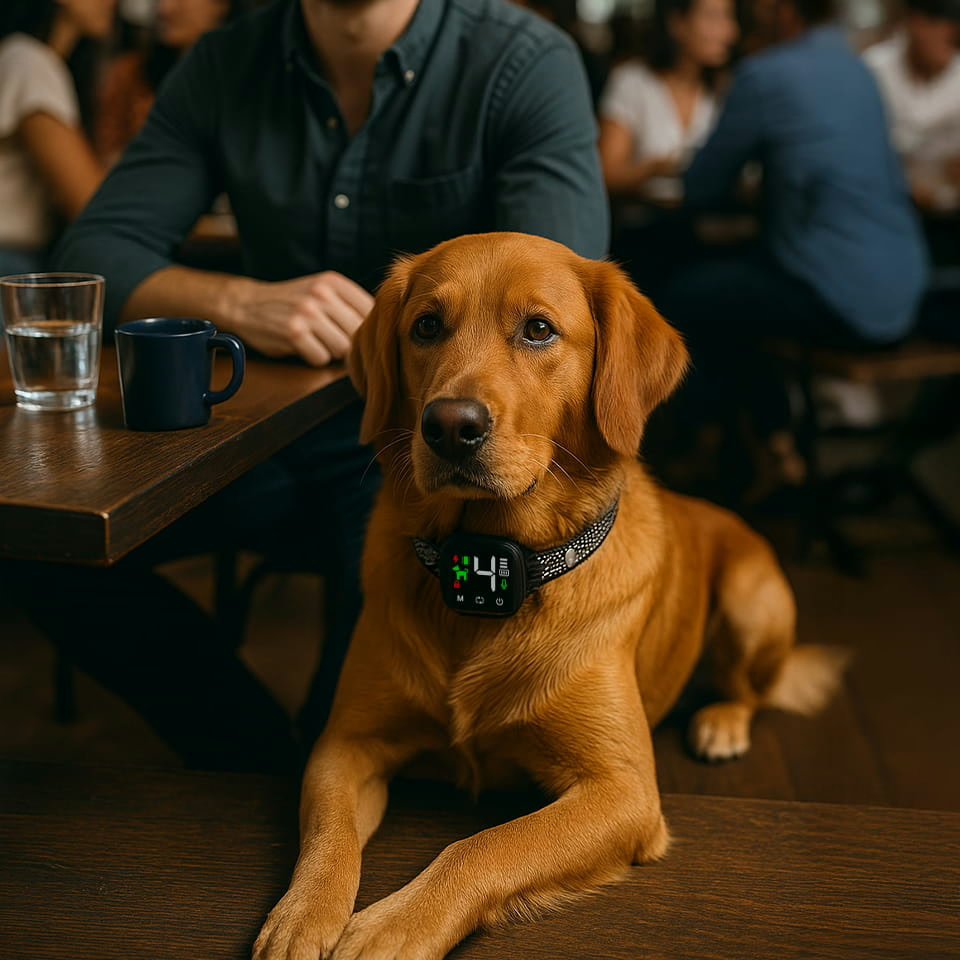
What works at the door, and what backfires
| Works | Backfires |
|---|---|
| Practicing the doorbell sound at low volume | Only "training" when real guests arrive |
| A mat or bed routine near the door | Yelling "quiet!" over the barking |
| Calm greetings, guests ignoring the dog at first | Opening the door mid-frenzy |
| A collar that reacts only to your dog's bark | Cheap collars triggered by the doorbell itself or by other dogs |
| Short daily sessions for a few weeks | Changing the rules from day to day |
Barking at the door when you're not home
Some dogs are angels when you're there and bark at every delivery the moment you leave. That's when neighbors start to notice. Training while you're home is the foundation, but it doesn't cover the hours you're out. A consistent cue that keeps working while you're away makes a real difference, and so does addressing boredom and loneliness. Our guide on how to stop barking when home alone covers that side of the problem step by step.
Why a smart collar fits door barking so well
Door barking happens fast. By the time you've put down what you're holding and walked to the door, your dog has already barked a dozen times, and every one of those barks felt rewarding. The NooBark smart collar fills that gap. Its waveform detection reacts only to your own dog's bark, so the doorbell, the TV or the dog next door won't trigger it. It leads with gentle sound and vibration, offers 8 sensitivity levels to match your dog's size and temperament, and has an optional static mode you can simply leave switched off.

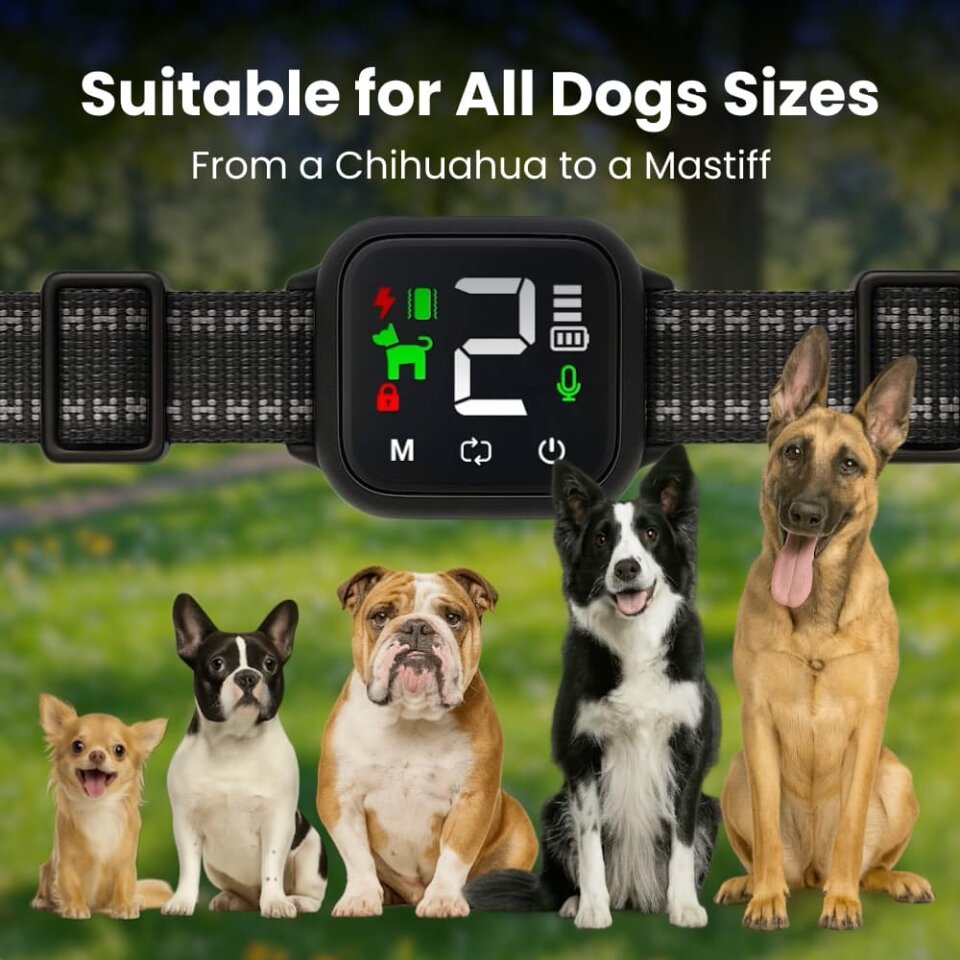
It's IP67 waterproof, runs around 15 days per charge and is easy to set up with its LED touch display, so it's ready whenever the doorbell rings. One honest tip: let your dog wear it for a few calm days before you start door practice, and use it together with the mat routine above. Most owners find the combination works far better than either one alone. If you're still weighing collar types, see how anti-bark collars work.
Our recommendation: the NooBark smart collar
If the doorbell turns your home into a barking zone, the NooBark smart anti-bark collar is the collar we recommend. Door barking is fast and full of noise, and NooBark is designed for precisely those two problems.
- Faster than you can get to the door: the cue arrives on the first bark, before the barking has a chance to feel rewarding.
- Not fooled by the doorbell: waveform detection responds to your own dog's bark only, not the bell, knocking, the TV or the dog next door.
- Pairs with the mat routine: gentle sound and vibration interrupt the bark, so your dog is ready to hear "go to your mat."
- Covers deliveries while you're out: around 15 days per charge, IP67 waterproof and 8 sensitivity levels.
Owners rate it 4.8/5 across more than 1,900 reviews. The official store offers up to 75% off with a 30-day money-back guarantee, enough time for the two-to-four-week window in which most dogs calm down at the door (see how long a bark collar takes to work for what to expect week by week).
Door barking FAQ
Why does my dog go crazy when the doorbell rings?
For most dogs the doorbell predicts something big: a stranger, a delivery or a favorite visitor. Some bark to alert or guard the home, others from pure excitement. Because the bell is followed by action almost every time, the reaction gets stronger with each repetition.
How long does it take to train a dog to stop barking at the door?
With short daily practice sessions, many owners see a calmer response within two to four weeks. Dogs with a long habit or a strong guarding instinct can take longer, so consistency matters more than speed.
Should I let my dog bark once at the door?
Many owners are happy with one or two alert barks followed by quiet. You can thank your dog, then cue a calm behavior such as going to a mat. The goal is a short alert, not silence at all costs.
Can a bark collar help with doorbell barking?
A humane smart collar can help by giving the same gentle sound or vibration cue the moment your dog starts barking, which makes training more consistent. It works best combined with the desensitization and mat training in this guide.
Is barking at visitors a sign of aggression?
Usually not; most door barking is alerting or excitement. But if your dog growls, lunges, snaps or seems fearful with guests, work with a qualified trainer or behaviorist and check in with your veterinarian.
Want the full picture on the collar? Visit the NooBark overview or read our complete NooBark review.