Quick answer
A barking diary is a simple log of when your dog barks, where, at what and what happened next. Keep it for one to two weeks before you change anything, then keep going while you train, reviewing it once a week. The patterns show you which triggers to work on first, whether your changes are working and what to tell your vet or trainer. If the log shows barking you cannot be around to answer, such as when you are out or asleep, a gentle smart collar like the NooBark keeps the response consistent.

When barking takes over a home, it starts to feel constant. That feeling is real, but it hides the details that matter. Most dogs do not bark randomly: they bark at specific things, in specific places, at specific times, and something in the environment usually rewards it. Trainers and behavior professionals often ask owners to log behavior for exactly this reason. You do not need special software. A notebook on the counter or a note on your phone is enough.
Why a barking diary works
- It shows the real triggers. Doorbell, passers-by, other dogs, boredom, being alone, wanting attention: the diary sorts them.
- It reveals the hidden reward. If barking at the window always ends with the mail carrier leaving, your dog thinks the barking worked.
- It gives you a baseline. Without a “before”, you cannot see progress, and slow progress feels like no progress.
- It makes appointments more useful. A vet or trainer can do much more with two weeks of notes than with “he barks a lot”.
The barking diary template
Copy these columns into a notebook or spreadsheet. One line per barking episode is enough; you do not need to count every woof.
| Date & time | Where | Trigger (what happened just before) | How long / how intense | What happened next | Notes |
|---|---|---|---|---|---|
| Mon 11:05 | Front window | Mail carrier | About 1 min, loud | Stopped when carrier left | Blinds open |
| Mon 19:40 | Backyard | Neighbor’s dog | Several minutes | Called inside | No walk today |
| Tue 02:30 | Bedroom | Unknown, outside noise? | Short bursts | Settled on its own | Window open |
The rows above only show the format. Your own diary will look different, and that is the point: it describes your dog, in your home.
What to write down (and what to skip)
- The triggerWhat happened right before the first bark? A sound, a person, a dog, you picking up your keys, nothing obvious. “Unknown” is a valid answer too; patterns often show up later.
- The placeWindow, door, fence, crate, car, bedroom. Places matter as much as triggers; our room-by-room home setup guide shows how to change them.
- Duration and intensityA quick alert bark and ten minutes of frantic barking are very different problems. A rough guess is fine.
- What happened nextDid the trigger leave? Did someone talk to the dog, open the door, give a treat? This column often explains why the barking keeps happening.
- ContextMissed walk, visitors, storms, a new routine, you working from home. Short notes are enough.
Skip anything you will not use. If the diary takes more than a minute per episode, it will not last two weeks.
How to read your diary
After the first week, sit down for ten minutes and look for repeats. Most owners find one to three patterns that cover most of the barking:
- Same place, same time → a routine trigger, like deliveries or school drop-off. Change the place (block the view) and plan for that time.
- Barking that ends with something your dog wants → attention or demand barking. See why does my dog bark at me.
- Barking mostly when you leave → a home-alone pattern, covered in how to stop your dog barking when home alone.
- Night barking with no clear trigger → worth noting for your vet, especially in older dogs. Our guide on why dogs bark at night lists the common causes.
- More barking on low-exercise days → energy, not “bad behavior”. Add a walk or a sniffing game before the usual barking window.
How often to review your progress
| When | What to do |
|---|---|
| Days 1–7 | Log only. Do not change anything yet; this is your baseline. |
| End of week 1 | Pick the one or two biggest patterns and plan one change for each. |
| Weeks 2–4 | Keep logging while you train. Compare each week with the baseline. |
| Every week after | A five-minute review: what improved, what did not, what to try next. |
Progress is rarely a straight line. A bad day after a good week is normal, especially after visitors, storms or schedule changes. Look at the weekly trend, not the single day.
When to take the diary to your vet or a trainer
Bring your notes if barking appears suddenly, gets worse quickly, happens mostly at night, comes with signs of pain, restlessness, changes in appetite or confusion, or looks like panic when your dog is alone. A vet can check for medical causes, and a qualified trainer or behavior professional can help with fear or anxiety. Our list of questions to ask your vet about barking pairs perfectly with your diary.
Where a smart collar fits in your plan
Many diaries show the same gap: barking that happens when no one is there to respond, such as while you are at work, in the shower or asleep. Training needs a consistent response, and you cannot give one when you are not there. That is where a gentle training aid helps. The NooBark smart collar responds to your dog’s own bark the same way every time, starting with sound or vibration, and your diary will show you whether those “nobody home” episodes are shrinking.
Our recommendation: the NooBark smart collar
Once your diary has shown you the triggers, and you have changed what you can at home, the NooBark smart anti-bark collar is the tool we recommend for the barking that remains. It brings the consistency that makes training work, and your log becomes the proof that it is working:
- Gentle-first modes. Sound, vibration, an optional adjustable static mode and a combination mode. Start with sound or vibration; many dogs never need more.
- 8 sensitivity levels. Catches real nuisance barking and ignores a single woof.
- Reacts only to your dog. Waveform detection recognizes your dog’s own bark and filters out other dogs, the TV and street noise.
- Fits all sizes. An adjustable strap for small breeds to large dogs.
- Made for everyday life. IP67 waterproof, around 15 days of battery per 2-hour charge and a simple LED touch display.
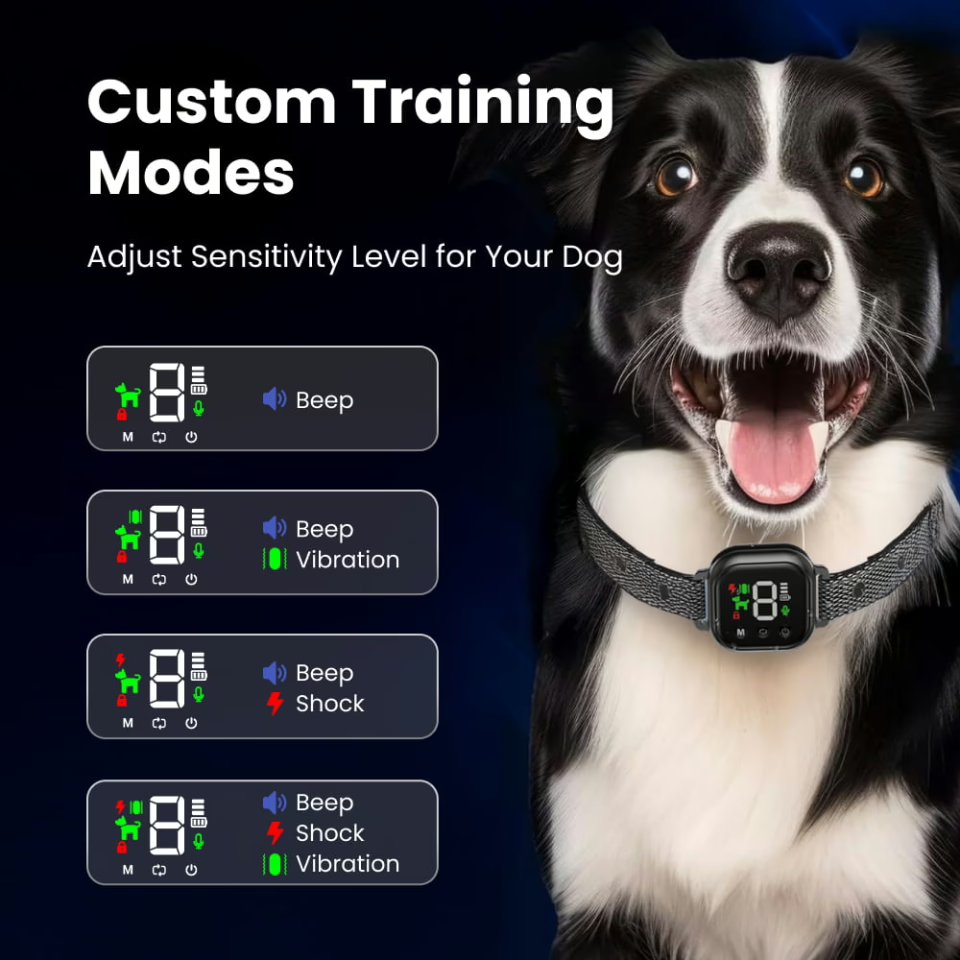

Owners rate it 4.8/5 across more than 1,900 reviews, and in our own testing it earned a 4.6/5. It was created with input from trainer Jordan Hayes around the idea that the kindest correction is the smallest one that works. Use it alongside a calm home setup and positive training, follow the maker’s guidance on age, size and fit, and check with your vet if your dog has any health concerns. It is up to 75% off on the official store, with a 30-day money-back guarantee, which is plenty of time to watch the difference in your diary.
Barking diary: FAQ
How do I track my dog's barking?
Keep a simple log with one line per barking episode: date and time, where it happened, what triggered it, roughly how long it lasted, what happened next and any context such as a missed walk or visitors. A notebook or a phone note is enough.
How long should I keep a barking diary?
Log for about one week before you change anything to get a baseline, then keep logging while you train and review it once a week. Most owners see clear patterns within one to two weeks.
What should I do with the information?
Pick the one or two biggest patterns and change one thing for each: block a view, adjust the routine, add exercise before a known barking window, or train a calm alternative. Then compare the next weeks with your baseline.
Should I show my barking log to the vet?
Yes, especially if the barking is new, getting worse, mostly at night or comes with other changes such as restlessness or appetite changes. Notes with times and triggers help a vet or a qualified trainer understand what is going on.
Can a bark collar help if my dog barks when I am not home?
That is where a gentle training collar helps most, because it responds consistently when you cannot. Choose one that starts with sound or vibration and reacts only to your dog's bark, use it alongside training, and watch your diary to see whether those episodes shrink.
Want to keep reading? See how long a bark collar takes to work, read why does my dog bark so much, visit the NooBark overview or read our complete NooBark review.