Quick answer
To reduce barking at home, work place by place: block the view at the front window, calm the entryway, soften outside noise in the bedroom, screen the backyard fence, make the crate a quiet den and keep car rides boring. Each change removes a trigger. Then pair the new setup with training that rewards quiet. For the moments you cannot be there to respond, a gentle smart collar like the NooBark keeps the message consistent.
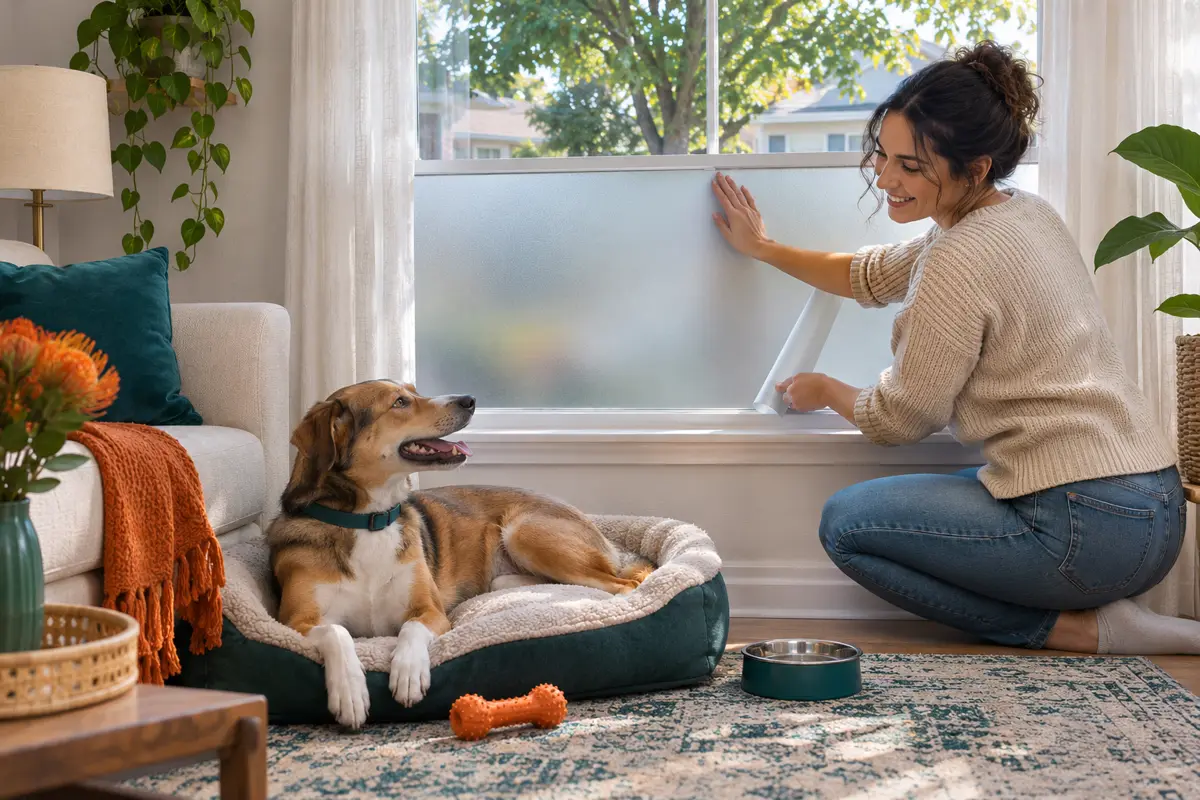
Dogs bark to alert, to ask, to release energy and to express worry. Trainers often split it into types, and we cover the reasons in why does my dog bark so much. What many owners miss is how much of it is tied to a place. The window seat becomes a guard post, the hallway becomes the launch pad for the doorbell, the backyard fence becomes a patrol route. The good news: places are easier to change than habits, and changing them makes training much easier.
Before you start: find your dog’s barking spots
For three or four days, jot down where your dog is when the barking starts and what just happened. Most dogs have two or three hot spots. Start with the one that causes the most barking. Our guide to keeping a dog barking diary gives you a simple template.
1. The living room and the front window
The classic “alert barker” spends the day on the sofa watching the street. Every passing dog, jogger and delivery van is a reason to sound the alarm.
- Block the view at dog height — frosted or static-cling privacy film on the lower part of the glass lets light in and blurs the street. Many trainers start a little above the dog’s eye line and lower it gradually.
- Move the lookout — shift the sofa, chair or ottoman your dog climbs to see out.
- Draw sheer curtains during the busiest hours of the street (school run, deliveries).
- Give a better spot — a comfortable bed in a calmer corner, with a chew toy, so there is something to do besides guard.
2. The entryway and the front door
Doorbells, knocks and footsteps on the porch are the most common trigger of all. We have a full training plan in how to stop your dog barking at the door; the setup side looks like this:
- Cover glass panels in or beside the door with decorative film.
- Create a “place” spot — a mat a few steps from the door where your dog learns to wait for a treat.
- Use a baby gate so your dog cannot rush the door while you open it.
- Keep the front door closed — dogs often bark through screen and storm doors.
- Ask for a delivery note — “please don’t ring” removes a daily trigger.
3. The bedroom at night
Night barking keeps the whole house (and the neighbors) awake. Causes and fixes are in why does my dog bark at night; here is the room setup:
- Sleep away from the street — an interior room or a spot away from front windows and the door.
- Add steady background sound — a fan or white-noise machine masks traffic, voices and other dogs.
- Make it dim — blackout curtains reduce headlights and shadows.
- Last walk and potty break right before bed.
If night barking is new, especially in a senior dog, talk to your vet first: our questions to ask your vet help you prepare.
4. The backyard and the fence
- Screen the fence line — privacy slats, a screen or shrubs where your dog sees passers-by or the neighbor’s dog.
- Supervise yard time — fence running alone quickly becomes a barking habit.
- Give a yard job — a sniff game, a ball or a digging spot keeps attention away from the fence.
More on this in how to stop your dog barking in the backyard.
5. The crate or “den”
- Place it in a calm corner, not next to the front door or a street-facing window.
- Cover three sides with a breathable cover so it feels like a den.
- Make it rewarding — a long-lasting chew only available there.
6. The home office and when you are out
If your dog barks when you leave or during your video calls, set up a calm routine: a walk before you sit down, a puzzle feeder, background sound and the door to the street-facing room closed. Barking that only happens when you are gone, with pacing or destruction, can be separation-related; see how to stop dog barking when home alone and talk with your vet if it looks like panic.
7. The car
- A secured crate or harness in the back seat reduces the view of passing cars and dogs.
- Window shades on the rear side windows.
- Short, boring practice rides that end somewhere neutral, not only at the vet.
Room-by-room cheat sheet
| Place | Common trigger | Change to make |
|---|---|---|
| Living room window | People, dogs, vans passing | Privacy film at dog height, move the lookout |
| Entryway | Doorbell, knocks, footsteps | “Place” mat, gate, film on door glass |
| Bedroom | Night noises, headlights | Interior spot, white noise, blackout curtains |
| Backyard | Neighbors, other dogs | Fence screen, supervised yard time |
| Crate | Sounds from the door or street | Calm corner, covered sides, special chew |
| Car | Passing dogs and cars | Crate or harness, rear shades, practice rides |
The setup works best with training
Changing the home removes triggers; training teaches your dog what to do instead. Reward quiet the moment it happens, give a calm cue for the door, keep exercise and play daily, and respond the same way every time. That last part, consistency, is the hardest, especially when you are not home, and it is why so many owners add a training aid. Avoid the classic slips described in training mistakes that make barking worse.
Our recommendation: the NooBark smart collar
Once your home is set up to remove the obvious triggers, the NooBark smart anti-bark collar is the tool we recommend for the barking that remains. It handles the consistency part of training, responding to the very first bark, the same way, whether you are in the room or not:
- Gentle-first modes. Sound, vibration, an optional adjustable static mode and a combination mode. Start with sound or vibration; many dogs never need more.
- 8 sensitivity levels. Catches real nuisance barking and ignores a single woof.
- Reacts only to your dog. Waveform detection recognizes your dog’s own bark and filters out other dogs, the TV and street noise.
- Fits all sizes. An adjustable strap for small breeds to large dogs.
- Made for everyday life. IP67 waterproof, around 15 days of battery per 2-hour charge and a simple LED touch display.


Owners rate it 4.8/5 across more than 1,900 reviews, and in our own testing it earned a 4.6/5. It was created with input from trainer Jordan Hayes around the idea that the kindest correction is the smallest one that works. Use it alongside a calm home setup and positive training, follow the maker’s guidance on age, size and fit, and check with your vet if your dog has any health concerns. It is up to 75% off on the official store, with a 30-day money-back guarantee.
Home setup and barking: FAQ
How can I stop my dog barking at the window?
Remove the view at your dog's eye level: frosted or static-cling privacy film on the lower part of the glass, closed sheer curtains, or moving the sofa or chair your dog uses as a lookout. Then reward your dog for staying calm when people pass, so the new habit replaces the old one.
Does white noise help with dog barking?
It can help with barking at outside sounds. A steady sound from a fan or white-noise machine masks traffic, voices and other dogs, especially at night or when you are out. It does not fix barking caused by boredom, anxiety or demand, which need training and routine.
Where should my dog sleep to bark less at night?
Usually in a quiet interior spot away from street-facing windows and the front door, with the room dim and a steady background sound. Many dogs settle better close to their people. If night barking is new, ask your vet to rule out pain, hearing or age-related changes.
Is changing the home enough to stop barking?
It removes many triggers, but most dogs also need training: rewarding quiet, a calm cue for the door, enough exercise and consistent responses. A gentle training collar can help with consistency, especially when you are not home.
Should I block my backyard fence?
If your dog barks at people, dogs or traffic it sees through the fence, a privacy screen, slats or shrubs along the fence line can help a lot. Avoid leaving your dog alone in the yard for long periods, where fence running often becomes a barking habit.
Want to keep reading? See how to stop barking based on your dog's profile, read how anti-bark collars work, visit the NooBark overview or read our complete NooBark review.