Quick answer
When a dog stares at you and barks, it is most often demand barking: your dog wants food, play, a walk or attention, and has learned that barking gets it. Less often it means they need to go outside, they're overexcited, bored, or something is bothering them. The fix is to stop paying for the bark, reward quiet instead, meet the real need on your schedule, and use a consistent, gentle cue at the first bark. A smart collar like the NooBark makes that cue perfectly timed and the same every time.
Barking at the mail carrier makes sense to most owners. Barking at the person who feeds, walks and loves them feels personal, and a little ridiculous. But to your dog, it's not rude at all. It's communication, and very often it's communication that has worked before. Understanding exactly what your dog is asking for is the first step to getting a quieter house without making your dog feel ignored.
The most common reason: demand barking
Demand barking is the dog version of "Hey. Hey. HEY." Your dog wants something, and barking at you is how they ask. It usually looks like this:
- Short, sharp barks, one or a few in a row, with pauses in between while your dog waits to see if it worked.
- Direct eye contact with you, or looking back and forth between you and the thing they want (the ball, the leash, your plate, the treat jar).
- Predictable timing: while you eat, at the same hour every evening, when you're on a call, when you sit on the couch.
Here's the uncomfortable part: demand barking is learned, and we're usually the teachers. If barking at you has ever ended with a toss of the ball, a bite of food, the door opening or even "shh, okay, okay," your dog learned that barking works. Behaviorists call that reinforcement; dogs simply call it a good strategy. The more often it pays off, even only now and then, the more persistent it gets.
Other reasons your dog barks at you
Not every bark aimed at you is a demand. Before you start training, rule these out:
| What you see | Likely reason | What to do |
|---|---|---|
| Barks at you, then goes to the door, restless | Needs to go outside | Take them out; this one should be answered |
| Play bow, wagging, bouncy barks | Play invitation or excitement | Play on your terms, after a moment of calm |
| Barks in the evening, pacing, chewing things | Boredom, not enough exercise | More walks, sniffing and puzzle toys earlier in the day |
| Barks when you hold or wear something unusual | Startled or unsure | Calm voice, let them sniff, no punishment |
| Sudden new barking, flinching, stiff body | Possible pain, fear or discomfort | See your veterinarian first |
| Stares, barks, waits, barks again | Demand barking | Follow the plan below |
If the barking is brand new, comes with other changes in behavior, or your dog seems anxious or in pain, talk to your vet before anything else. A dog who barks because something hurts needs care, not training.
Why it gets worse before it gets better
When you stop rewarding a demand bark, many dogs bark more for a while. Trainers call this an extinction burst: the strategy that always worked suddenly doesn't, so your dog tries harder. This is the moment most owners give in, and giving in after ten barks teaches the dog that ten barks is the price. Knowing this burst is coming, and that it means the plan is working, makes it much easier to hold steady. We cover this trap in more detail in 9 training mistakes that make barking worse.
How to stop your dog barking at you: a 6-step plan
- Meet the real needs firstA well-exercised, mentally busy dog has far less reason to nag. Add a sniff walk, a short training session or a food puzzle before the times your dog usually barks at you.
- Stop paying for the barkNo eye contact, no talking, no food, no ball while your dog is barking at you. Calmly turn away or step out of the room for a few seconds.
- Pay generously for quietThe moment there's a pause, even a few seconds, reward it: attention, a toss of the toy, a treat. Your dog learns that silence is what works now.
- Teach a polite way to askA sit, a nose touch to your hand or lying on a mat. Reward that instead, so your dog has a better strategy than barking.
- Get everyone on the same rulesIf one person in the house still answers the bark, the dog learns to keep trying. Everyone ignores the bark, everyone rewards the quiet.
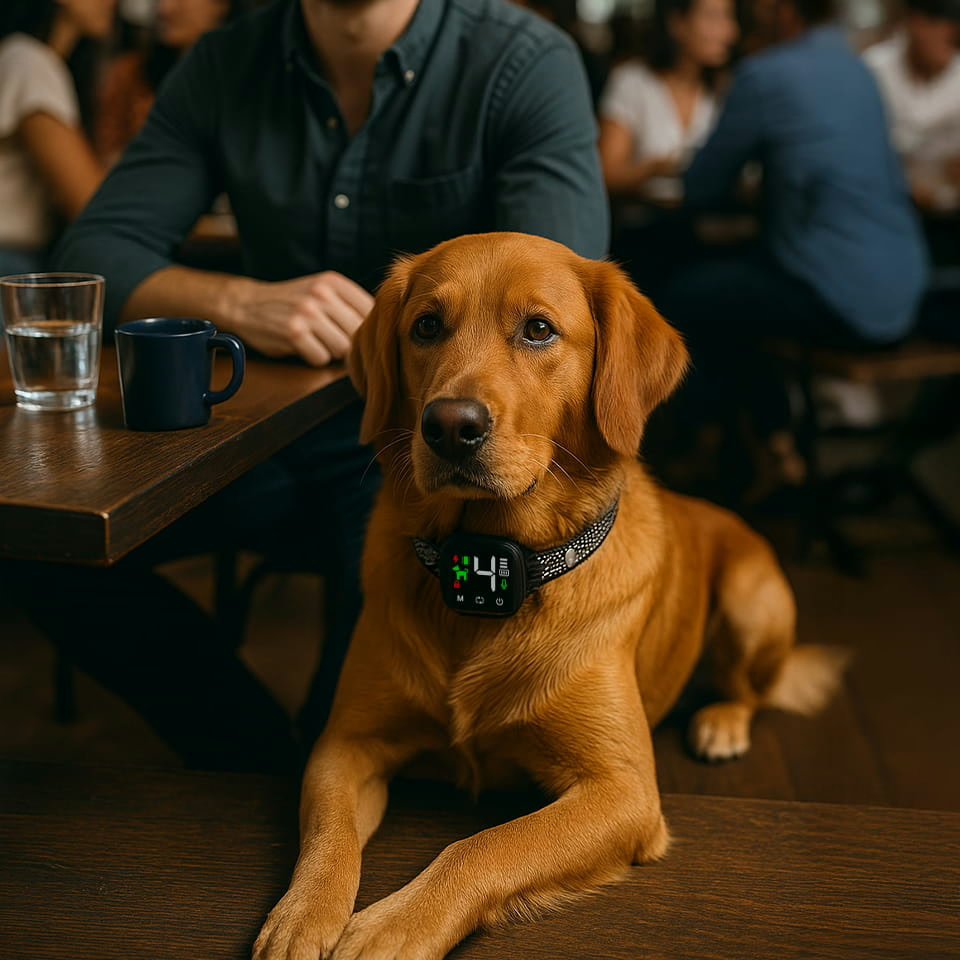
- Add a gentle, consistent cue at the first barkTiming is the hardest part for humans, especially when you're on a call or eating. A consistent cue that arrives the instant barking starts, and only then, helps the dog connect "bark" with "that didn't work."
Common situations, and what to do in each
- Barking at you during dinner. Give your dog a long-lasting chew or a stuffed food toy on their bed before you sit down, and never feed from the table.
- Barking while you work from home. Schedule a play break before your first call, then give a quiet activity. Reward your dog for lying calmly near the desk.
- Barking to make you play. Put the ball away when barking starts; bring it back out after a calm sit. Play still happens, just not on demand.
- Barking at bedtime. Make sure the last potty trip and some calm activity happen first. If your dog barks at night for other reasons, see why dogs bark at night.
Where a smart collar fits in
Ignoring a barking dog sounds easy until you're on a work call or holding a hot plate. That's where many owners slip, and an inconsistent response keeps demand barking alive. A smart anti-bark collar like the NooBark takes the timing problem off your shoulders: it responds to the first bark, the same way every time, while you keep doing the most important part, rewarding the quiet. Used gently and alongside the steps above, it helps the new rule sink in much faster.
Our recommendation: the NooBark smart collar
If your dog has turned barking at you into a habit, the NooBark smart anti-bark collar is the tool we recommend. Demand barking is all about timing and consistency, and that is exactly what NooBark does best, while starting with the gentlest options:
- Responds to the first bark. The cue arrives right as the demand starts, which is when dogs actually learn.
- The same cue, every time. No mixed messages, whether you're eating, on a call or across the room.
- It reacts only to your dog. Waveform detection recognizes your dog's own bark and filters out other dogs, TV and street noise.
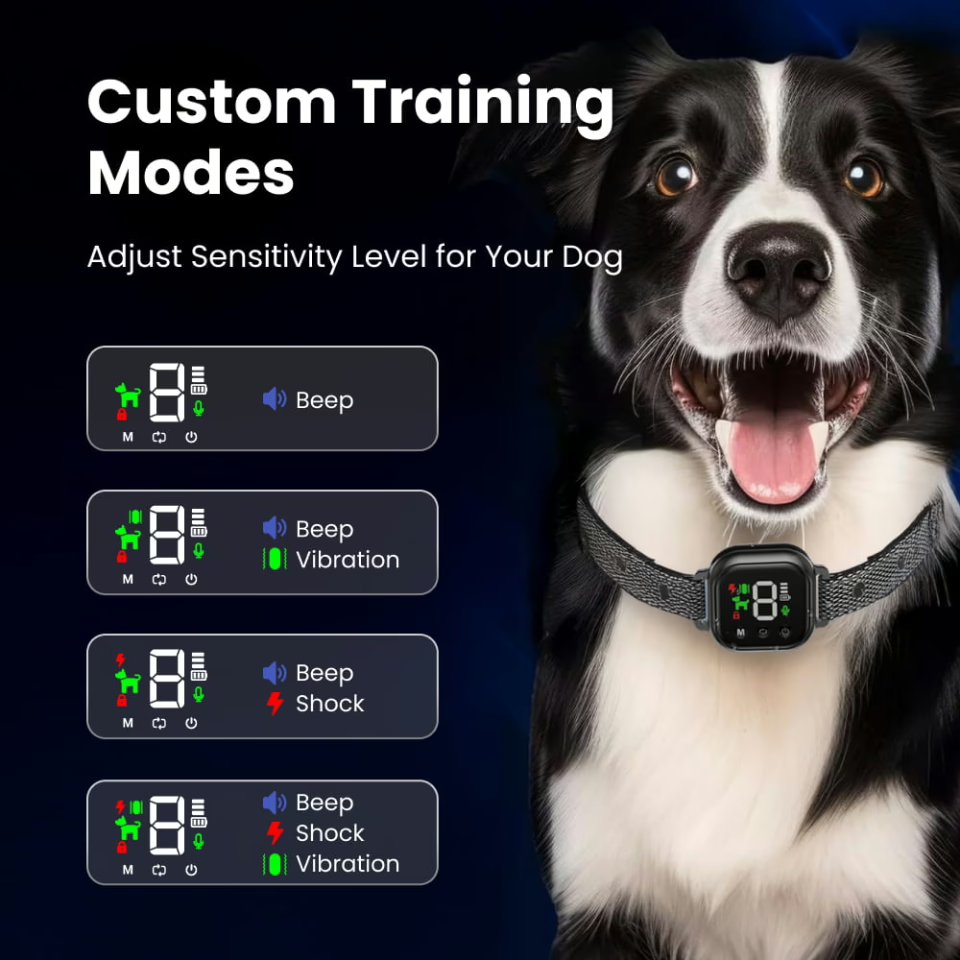
- Gentle-first modes. Sound, vibration, an optional adjustable static mode and a combination mode. Start with sound or vibration; many dogs never need more.
- 8 sensitivity levels. Catch real nuisance barking without reacting to a single woof.
- Made for everyday life. Adjustable strap for all dog sizes, IP67 waterproof, around 15 days of battery per 2-hour charge and a simple LED touch display.

Owners rate it 4.8/5 across more than 1,900 reviews, and in our own testing it earned a 4.6/5. It was created with input from trainer Jordan Hayes and is built around the idea that the kindest correction is the smallest one that works. Pair it with rewards for quiet and enough daily exercise, and "bark at the human" stops being a strategy that works. It's up to 75% off on the official store, with a 30-day money-back guarantee.
Why does my dog bark at me: FAQ
Why does my dog stare at me and bark?
Most of the time it is demand barking: your dog wants something (food, play, a walk or your attention) and has learned that barking at you gets it. Short barks with pauses, direct eye contact and glances at the thing they want are the classic signs.
Should I ignore my dog when it barks at me?
For demand barking, yes: do not reward the bark with eye contact, talk, food or play, and reward the moment of quiet instead. But first make sure the bark is not about a real need, such as going outside, and that your dog is getting enough exercise and attention during the day.
Why does my dog bark at me more when I ignore it?
That is normal and usually temporary. When a strategy that always worked stops working, dogs often try harder for a while before giving it up. If you give in during this burst, your dog learns that more barking is the price, so staying consistent is key.
Can a dog bark at you because something is wrong?
Yes. If the barking is sudden and new, or comes with flinching, hiding, a stiff body or other changes in behavior, your dog may be in pain, scared or unwell. Check with your veterinarian before starting any training.
Does a bark collar work for demand barking?
A gentle smart collar can help because it delivers the same cue at the first bark every time, which is hard for people to do consistently. It works best alongside rewarding quiet and meeting your dog's needs for exercise and play, starting with the mildest mode, such as sound or vibration.
How long does it take to stop demand barking?
Many dogs improve within a few weeks when everyone in the house is consistent, but it varies with how long the habit has been rewarded. Expect a short spike at the start, then steady progress.
Want to keep reading? See why dogs bark so much: the 7 causes, visit the NooBark overview or read our complete NooBark review.