Quick answer
When your dog won't stop barking: stay calm, block or remove the trigger, ask for a simple cue like “sit” or “mat”, and reward the first seconds of quiet. Never yell or reward the barking with attention. Prevent the next round with daily exercise and sniffing time, and call your vet if the barking is sudden, new in an older dog or comes with other changes. For habit barking that keeps coming back, a gentle-first collar that reacts only to your dog, like the NooBark, helps the whole family give the same signal every time.
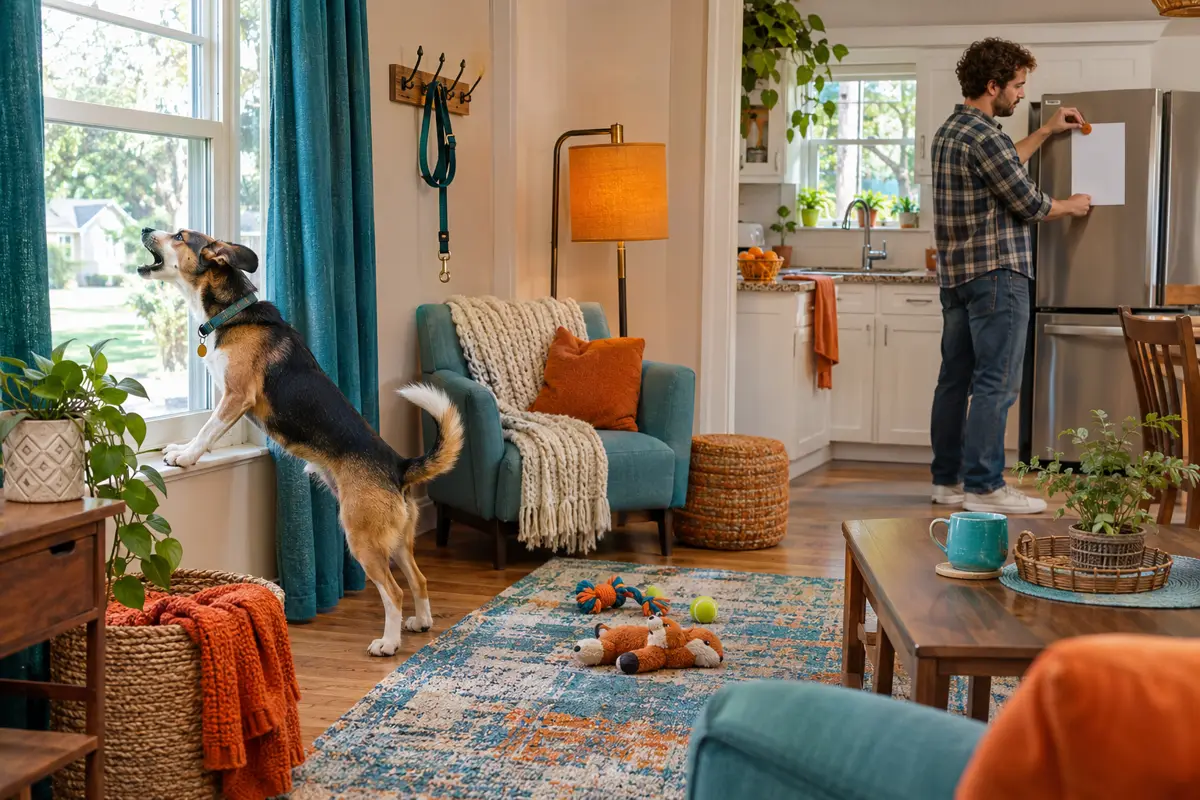
“My dog won’t stop barking” is one of the fastest-growing dog searches in the U.S. this fall, and it usually comes from a tired household where everyone reacts differently: one person yells, another opens the door, a third hands out a treat to make it stop. The dog learns that barking gets something. The fix starts with consistency, and the easiest way to get it is a single page everyone follows.
The barking cheat sheet (print me)
1. In the first minute
- Stay calm and quiet. Breathe.
- Block the trigger: close the curtain, step between dog and door.
- Give one cue your dog knows: “sit”, “mat” or “come”.
- Reward 2–3 seconds of quiet. Then a little longer next time.
2. Never
- Yell or say “shh” over and over.
- Open the door, give a treat or a toy while the dog is barking.
- Punish after the fact. Dogs connect only what happens in the moment.
3. Every day
- Two walks with sniffing time, plus play.
- A puzzle feeder or chew when you leave.
- A calm spot away from the front window.
4. Call the vet if
- The barking is sudden or new, especially in a senior dog.
- It comes with limping, pacing at night, appetite changes or signs of pain.
- Your dog seems panicked when left alone.
5. Bark collar basics
- Sound or vibration first; lowest sensitivity that works.
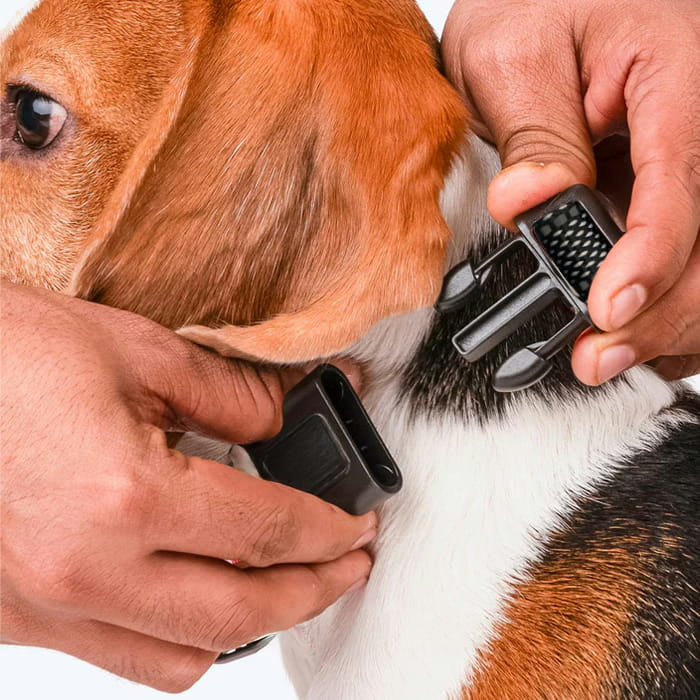
- High on the neck, snug, two fingers under the strap.
- On for the barking hours, off at night and for walks.
- Check the skin daily; charge at bedtime.
Tip: use your browser’s Print button to print just this page, or take a screenshot of the box above and save it to your phone’s photo favorites.
Line by line: why each step works
1. The first minute: calm, block, cue, reward
Barking is contagious. When you raise your voice, many dogs hear it as joining in. A quiet body and a single cue give your dog something else to do. Blocking the trigger matters just as much: a dog staring at the street through a window will bark again in a minute, while a closed curtain ends the show. Then reward the first moment of quiet, even if it is two seconds, and build from there. For door triggers in particular, see how to stop barking at the door.
2. The “never” list
Every item on this list accidentally pays the dog for barking. Opening the door, offering a treat to make the noise stop or picking up a small dog all teach the same lesson: bark louder and something happens. Punishing afterwards does not work either, because the dog cannot connect it to the bark. Our list of training mistakes that make barking worse goes into each one.
3. The daily routine
A dog with unspent energy and nothing to do will find a job, and watching the window is the easiest one. Walks with time to sniff, short play sessions and a chew or puzzle feeder when you leave take away much of the fuel. Moving the dog’s resting spot away from the front window or the door removes the trigger. If you want ideas for the whole house, here is our room-by-room guide.
4. When to call the vet
Not all barking is a training issue. Pain, hearing or vision changes, cognitive changes in older dogs and anxiety can all show up as more barking. If the change is sudden or comes with other signs, a vet visit comes before any training plan or collar. We prepared a list of questions to ask your vet about barking.
5. Bark collar basics
A gentle-first collar is a tool for habit barking that keeps coming back after you have covered the basics. Start with sound or vibration at the lowest sensitivity that works, fit it high on the neck, and use it only during the hours your dog actually barks. We explain the fit in detail in how tight a bark collar should be.
Who should read the sheet
| Household member | Their one job |
|---|---|
| Adults | Same cue, same reward, same collar schedule |
| Kids | Never open the door or give treats during barking; call an adult |
| Dog sitter or walker | Follow the “first minute” and “never” boxes |
| Visitors | Ignore the dog until it is calm, then greet |
Our recommendation: the NooBark smart collar
For a dog that won't stop barking even after you have covered the routine, the NooBark smart anti-bark collar is the one we recommend. It is the most practical way to make the signal consistent: it responds the same way every time your dog barks, whoever is home, so the whole family stops sending mixed messages.
- Gentle-first modes. Sound, vibration, an optional adjustable static mode and a combination mode.
- 8 sensitivity levels. Fine-tune it to your dog and your home.
- Reacts only to your dog. Waveform detection recognizes your dog’s own bark and filters out other dogs, the TV and street noise.
- Long battery. Around 15 days per 2-hour charge, according to the maker.
- Easy to live with. IP67 waterproof, LED touch display and an adjustable strap for small to large dogs.
Owners rate it 4.8/5 across more than 1,900 reviews, and in our own testing it earned a 4.6/5. Follow the maker’s guidance on age, size, fit and daily wear, and check with your vet if your dog has any health concerns. It is up to 75% off on the official store, with a 30-day money-back guarantee.
Dog won't stop barking: FAQ
What do you do when your dog won't stop barking?
Stay calm and quiet, remove or block the trigger if you can (close the curtain, move your dog away from the door), ask for a simple behavior your dog knows, such as sit or go to the mat, and reward the first few seconds of quiet. Yelling usually adds to the noise. Then look at the pattern: most nonstop barking has a trigger, a routine gap or a health reason behind it.
Why won't my dog stop barking all of a sudden?
A sudden change in barking can come from a new trigger outside, boredom, anxiety, or pain and other health problems, especially in older dogs. If the barking is new, comes with other changes such as limping, restlessness at night or changes in appetite, or your dog seems distressed, talk to your veterinarian first.
Should I yell at my dog to stop barking?
No. To many dogs, a raised voice sounds like you are barking too, and it can add excitement or stress. A calm cue and a reward for quiet works better and keeps everyone in the household consistent.
How do I get everyone at home to handle barking the same way?
Write the plan down in one place everyone sees, such as a one-page sheet on the fridge: the cue you use, what to reward, what never to do and when the collar goes on. Consistency between family members is one of the biggest factors in how fast barking improves.
Can a bark collar help a dog that won't stop barking?
A humane, gentle-first collar can help interrupt habit barking while you work on the routine, as long as you rule out health causes, start with sound or vibration, fit it correctly and follow the daily wear limit in the manual. The NooBark reacts only to your own dog's bark and has 8 sensitivity levels.
Want to keep reading? See why your dog barks so much, how to stop barking when your dog is home alone, visit the NooBark overview or read our complete NooBark review.